Problem Set 05 | Keziah Vickraman
Place a problem · your turn
Where does each business problem sit, and who should lead it?
A person leads, AI inside
Agents run it, a person judges
AI alone, with checks
A person decides, AI alongside
For each problem, write the event that starts the work and what happens next. Problems are listed in quadrant order.
Quick collaboration log
- What I delegated to AI
- Building and laying out this page (the quadrant board, the tabs and the agent log), turning my Zap history export into the run cards, and tightening the wording of my write-up.
- What I checked, and how
- Every number on the page against the Zap history export: 37 runs, 10 successes, 27 throttled, and each run time converted to SGT. I also matched each screenshot to its caption and read each alert email against its source link.
- One AI error I caught
- The AI repeated the three “Load…” buttons in both the toolbar and the “Start here” box, so every loader showed up twice on an empty board. I spotted the duplicate and had it removed.
- Time and cost
- About 30 minutes to build and run the Zap (11:25–11:56 PM SGT, 18 October), plus about 1.5 hours on 19 October to test the tricky case, fix the feed and rerun it (12:21–1:46 PM SGT), all on Zapier’s free plan, so $0 for the agent. About 3 hours on this page with AI help; the AI tool’s cost is the tokens used, which I am tracking.
Reflection
Full-Court Press fitted the job of relaying every new WNBA story quickly, because each relay has a right answer that I could check against Zap history. It failed on quality and reliability: it forwarded fake streaming pages as news, treated weeks-old stories as new, and lost 27 alerts to the free plan’s sending limit without any warning. I have since added exclusion terms to the feed, and next I would move to a plan without the sending cap and send a daily summary of throttled or failed runs so a person sees what the agent missed.
Q1 · Where my agent sits on the map
(a) My quadrant
Full-Court Press sits in AI alone, with checks (bottom left).
(b) The two questions
Is there a right answer? Yes. The agent’s job is to relay every new item in a Google News feed for “WNBA” to the league comms inbox, accurately and once. Each run can be checked as right or wrong. In my first run at 11:28 PM on 18 October, the headline, publish date and link in the email matched the feed item exactly, which shows a correct relay. The failures are just as clear: of 37 runs, 27 were throttled by Email by Zapier’s sending limit and never delivered, three stories triggered twice (the repeat runs were throttled), and some “new” items were weeks old. Every success and failure can be checked against Zap history, which is what work with a right answer looks like.
Must people and AI do it together? No, either can do it alone. All 37 runs finished with no human input during the run. A person could also do the job alone by checking Google News every hour. Nothing in the process requires a person’s judgment before a run can finish.
(c) The person in the loop
The agent may fetch and forward stories alone, but a person stays at the gate in two places. First, the league comms manager reads alerts at 10 AM daily and decides whether the league responds. That’s a judgment the agent never makes. The “Dirty Play” story about a player’s conduct is an example: relaying it had a right answer, while deciding whether to respond doesn’t. Second, someone audits Zap history weekly against the feed, checking for throttled runs, duplicates, outdated stories and spam such as the fake “WATCH LIVE NOW” streaming pages, two of which came through as successful runs. This check matters because the agent doesn’t report its own failures: 27 missed alerts produced no warning in the inbox. Zapier did block a broken feed URL with a 404 email when I tried to publish it, but nothing flags a feed that stops producing items once it’s live.
The agent would move to A person decides, AI alongside if it drafted responses or rated each story’s risk, since those have no single right answer. It would move to A person leads, AI inside if it posted holding statements only after the comms manager approved them.
(d) My group’s view
A person leads, AI inside
Agents run it, a person judges
AI alone, with checks
A person decides, AI alongside
My agent log: Full-Court Press
Built on Zapier’s free plan with one trigger and one action. All times SGT.
My agent card
My agent card | Full-Court Press | finished 18 October 2026, 11:28 PM
1. The job: Emails each new WNBA news story to the league office’s communications manager (role-played by me) so no story is missed before media calls
2. The trigger: A new item in a Google News RSS search for “WNBA” (RSS by Zapier, New Item in Feed)
3. The tools: RSS by Zapier (New Item in Feed); Email by Zapier (Send Outbound Email)
4. It must never: Email anyone but me — the To field is fixed to my own address, with no mapped recipient
5. Where a person checks: The comms manager reviews all alerts at 10 AM daily and decides whether the league responds; Zap history is audited weekly against the feed
Setup and runs
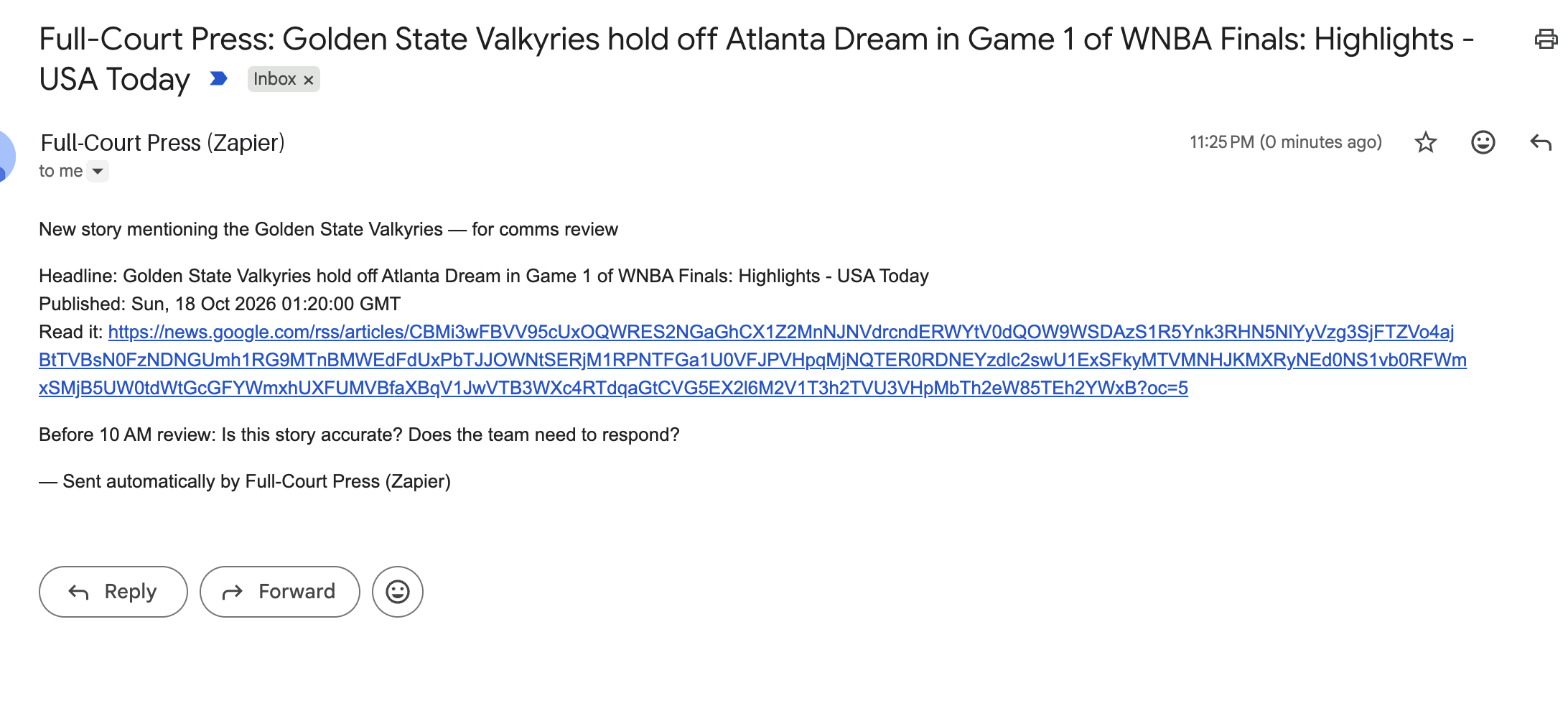
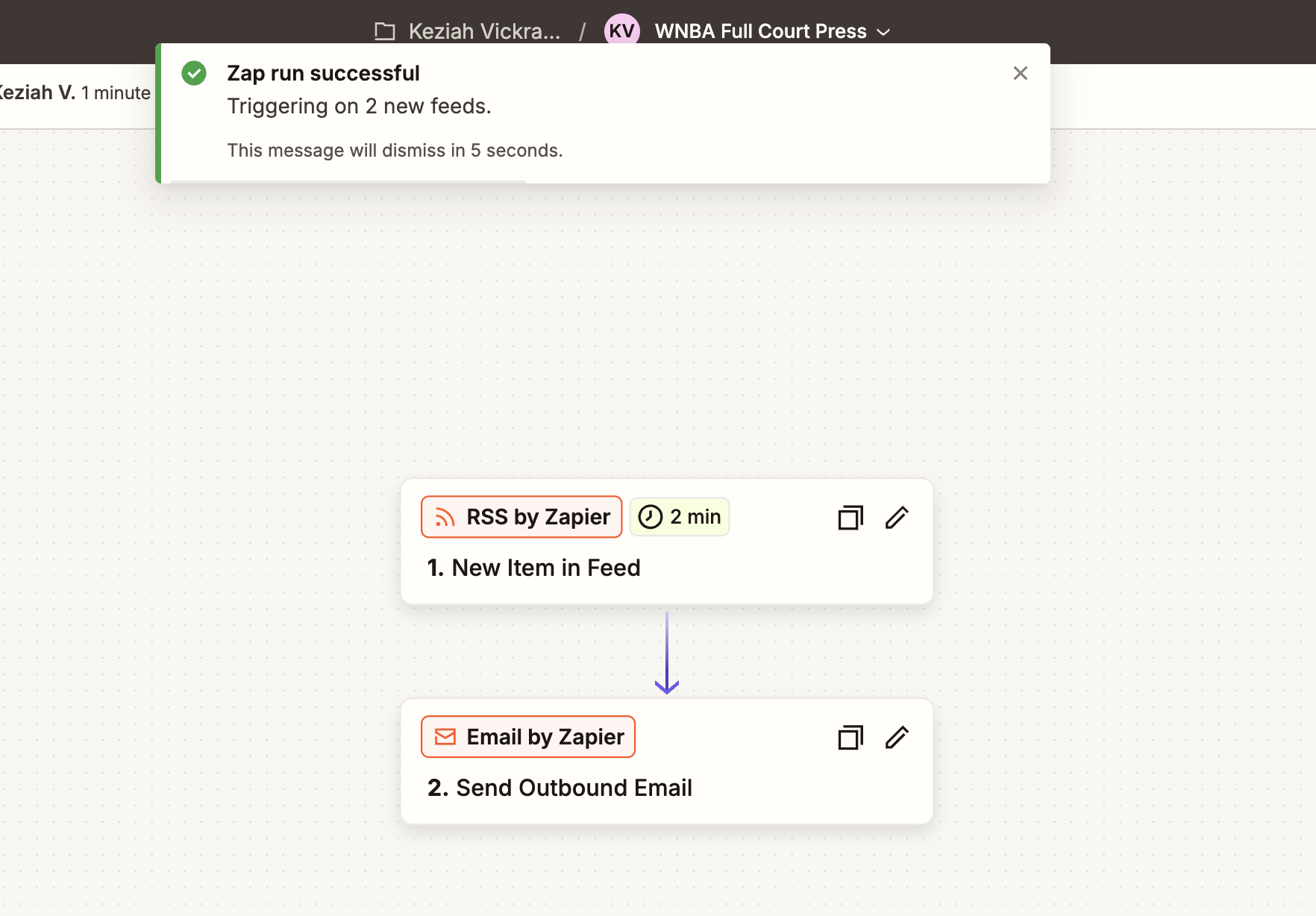
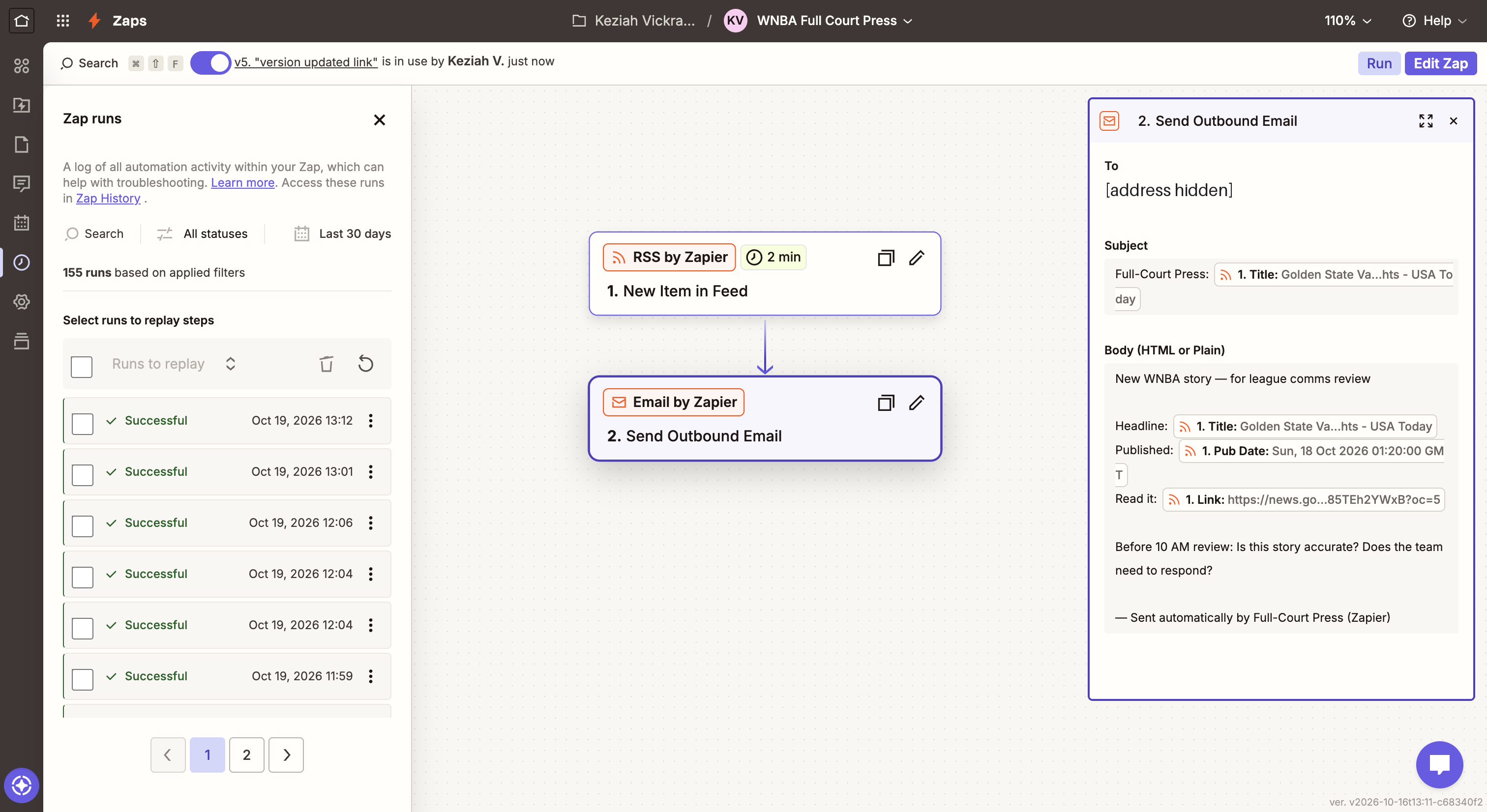
In the first 28 minutes, 37 runs fired: 10 sent and 27 were throttled by Email by Zapier’s sending limit and never delivered. Three stories triggered twice (each repeat run was throttled, so none reached the inbox twice), and some ‘new’ items were weeks old (the oldest from 26 August), because Zapier triggers on items new to it, not newly published.
Errors I caught (not planned)
How the scope changed
- League-wide. I started with every story from a Google News search for ‘WNBA’.
- One team. I narrowed the alerts to the Golden State Valkyries, the team in the Finals. Only the alert email’s wording changed (“New story mentioning the Golden State Valkyries”). The feed itself stayed the league-wide ‘WNBA’ search, as every run in Zap history shows, so league-wide stories still came through. At 11:47 PM I changed the wording back to “New WNBA story”.
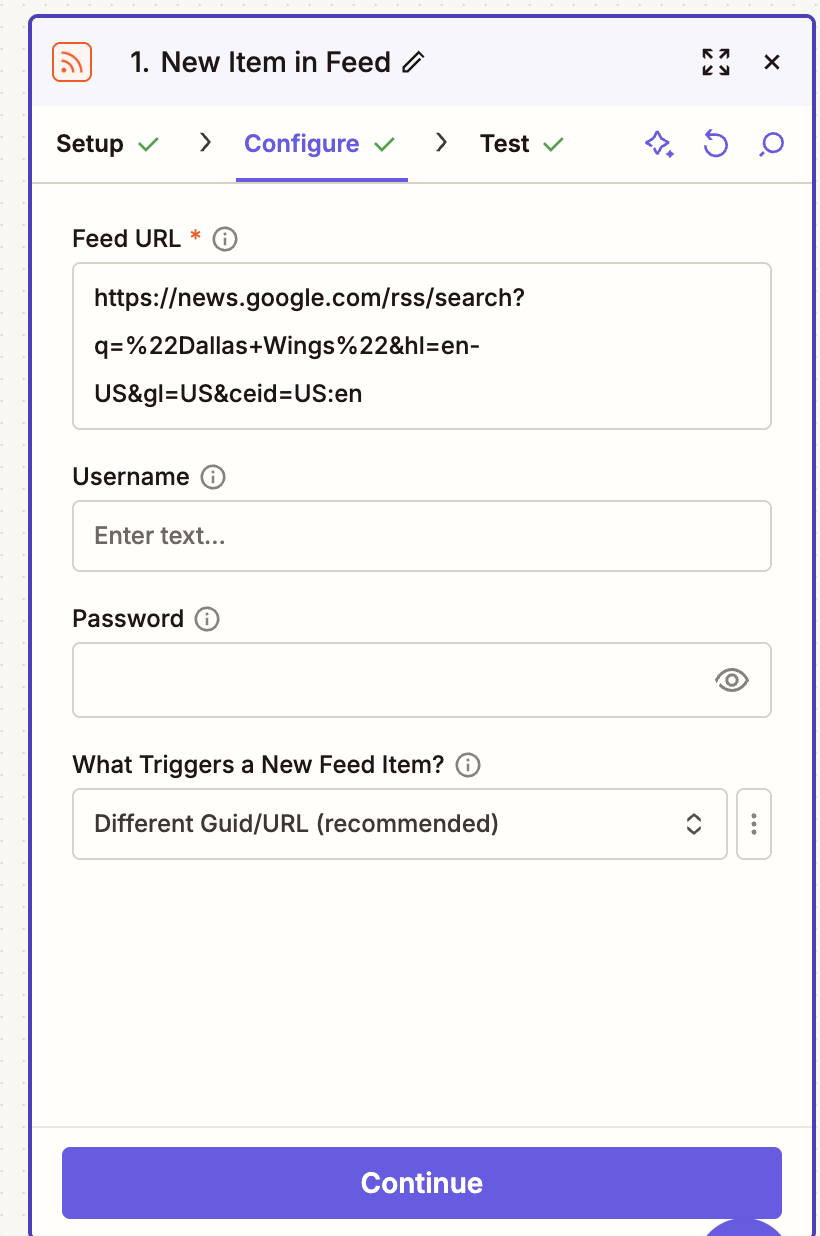
- A different team, as a test. I switched to a Dallas Wings search to see whether a team feed would forward everything about that team, betting news included.
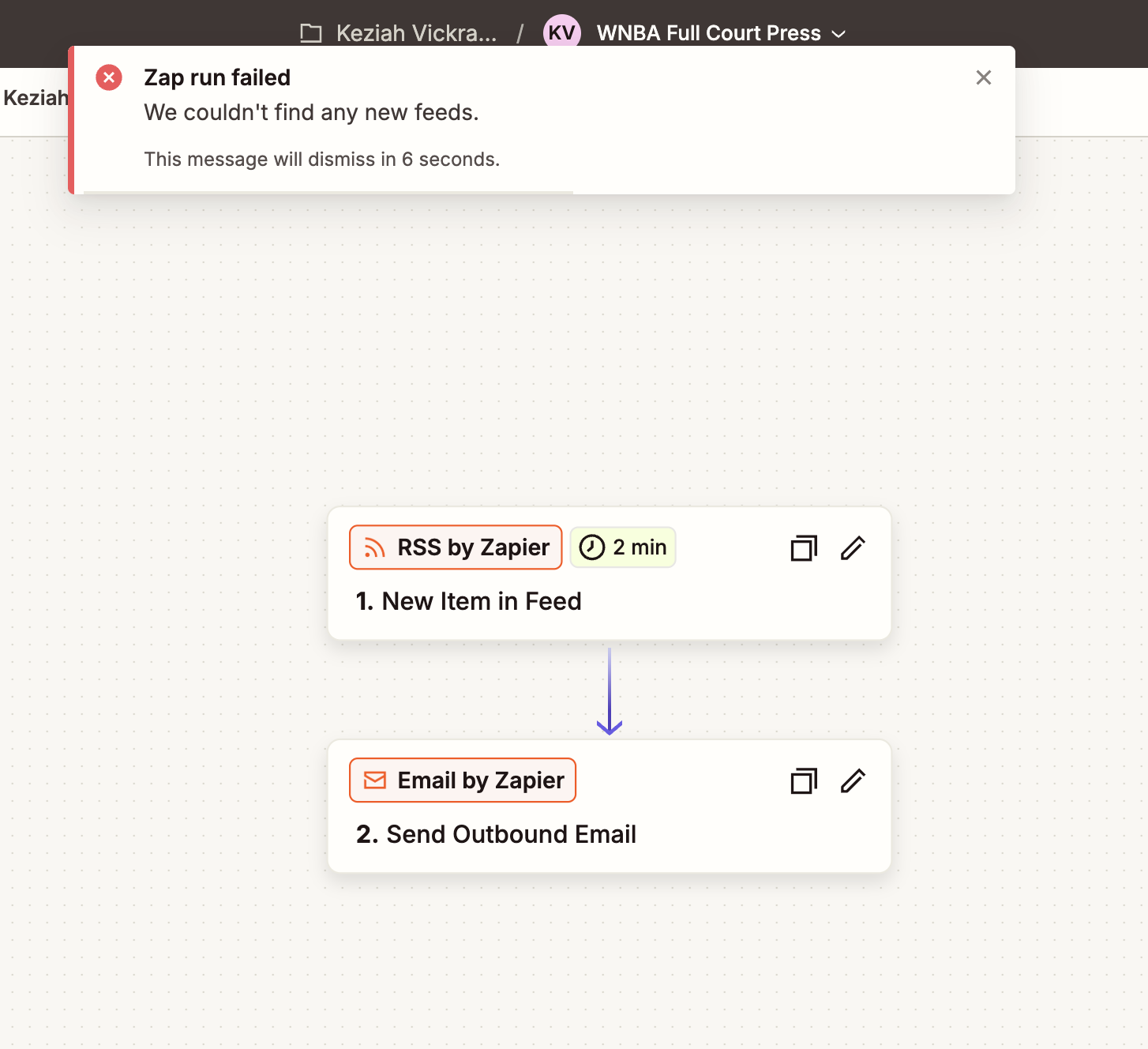
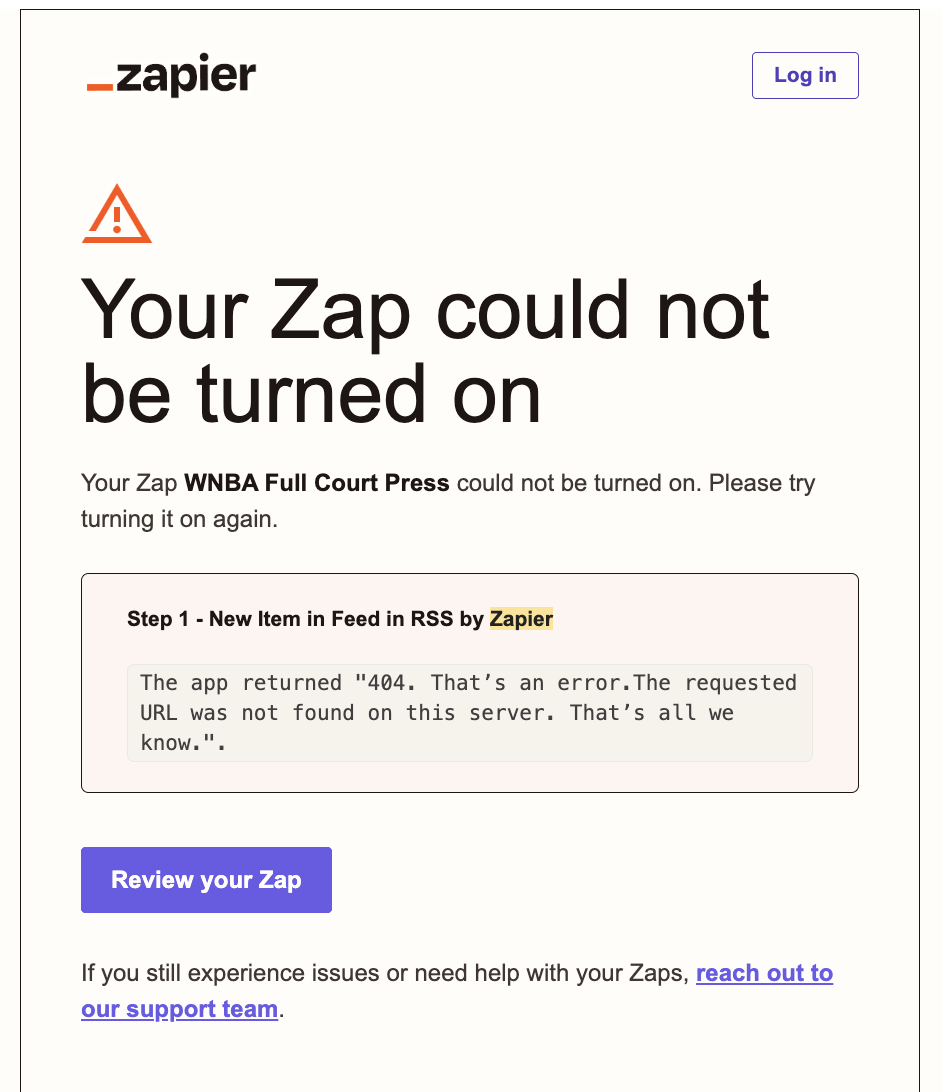
- Back to league-wide. The Wings feed failed, so I returned to the ‘WNBA’ search and reframed the job as league comms.
Expectation (Wings test)
The Zap would forward every new Wings item, including betting and odds stories, so I could compare what came through with what a comms manager actually needs.
Reality
No items came through at all. Google returned a 404 for the feed, so Zapier could not turn the Zap on, and the test never ran.
Tricky case: fake live-stream pages
Expectation (written 18 October, 11:55 PM, before the test)
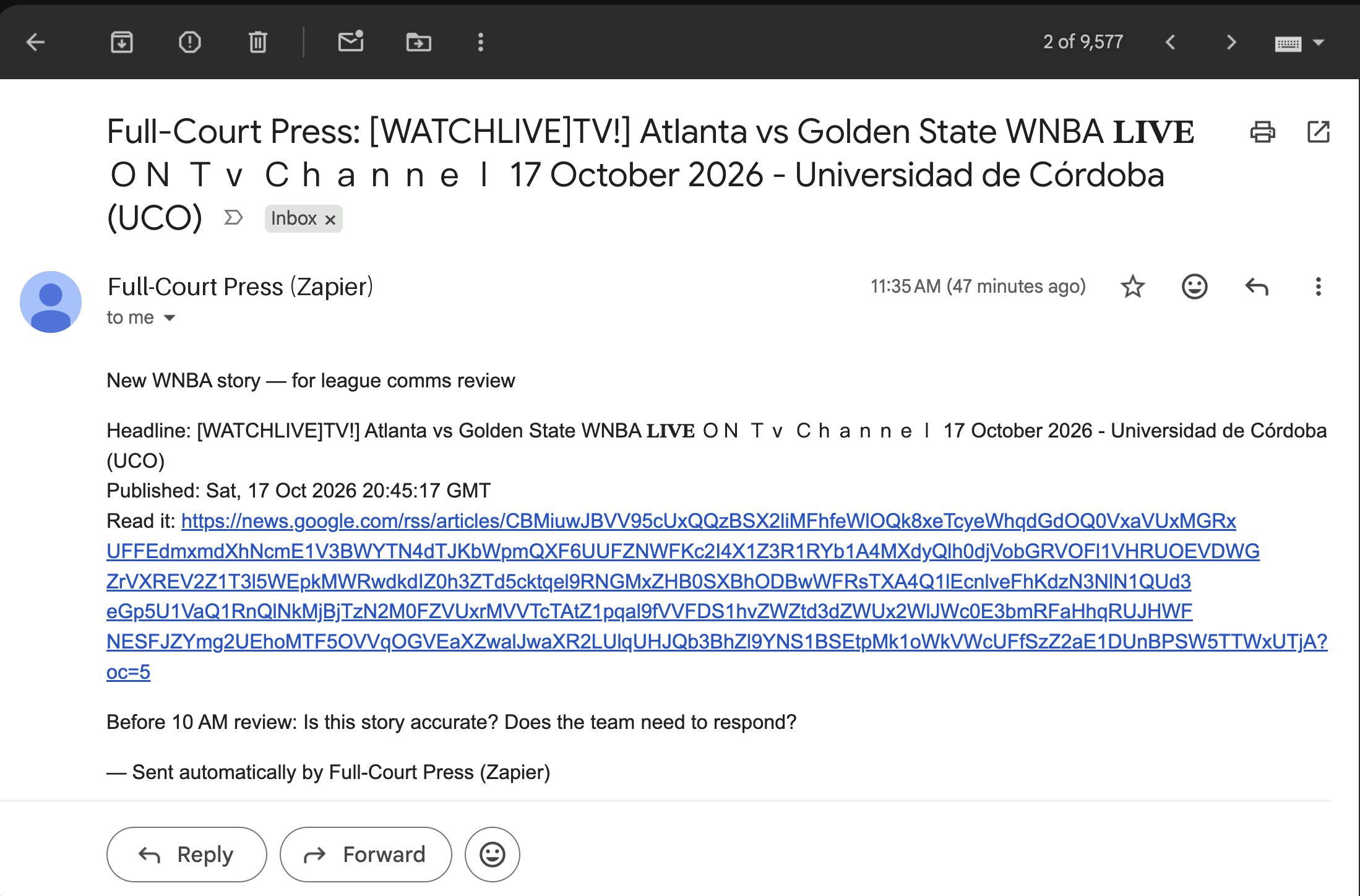
On the next game day, I expect the Zap to forward fake streaming pages to the comms inbox as if they were news, because it matches keywords, not quality. Each will show as a successful run, because technically nothing went wrong.
What actually happened
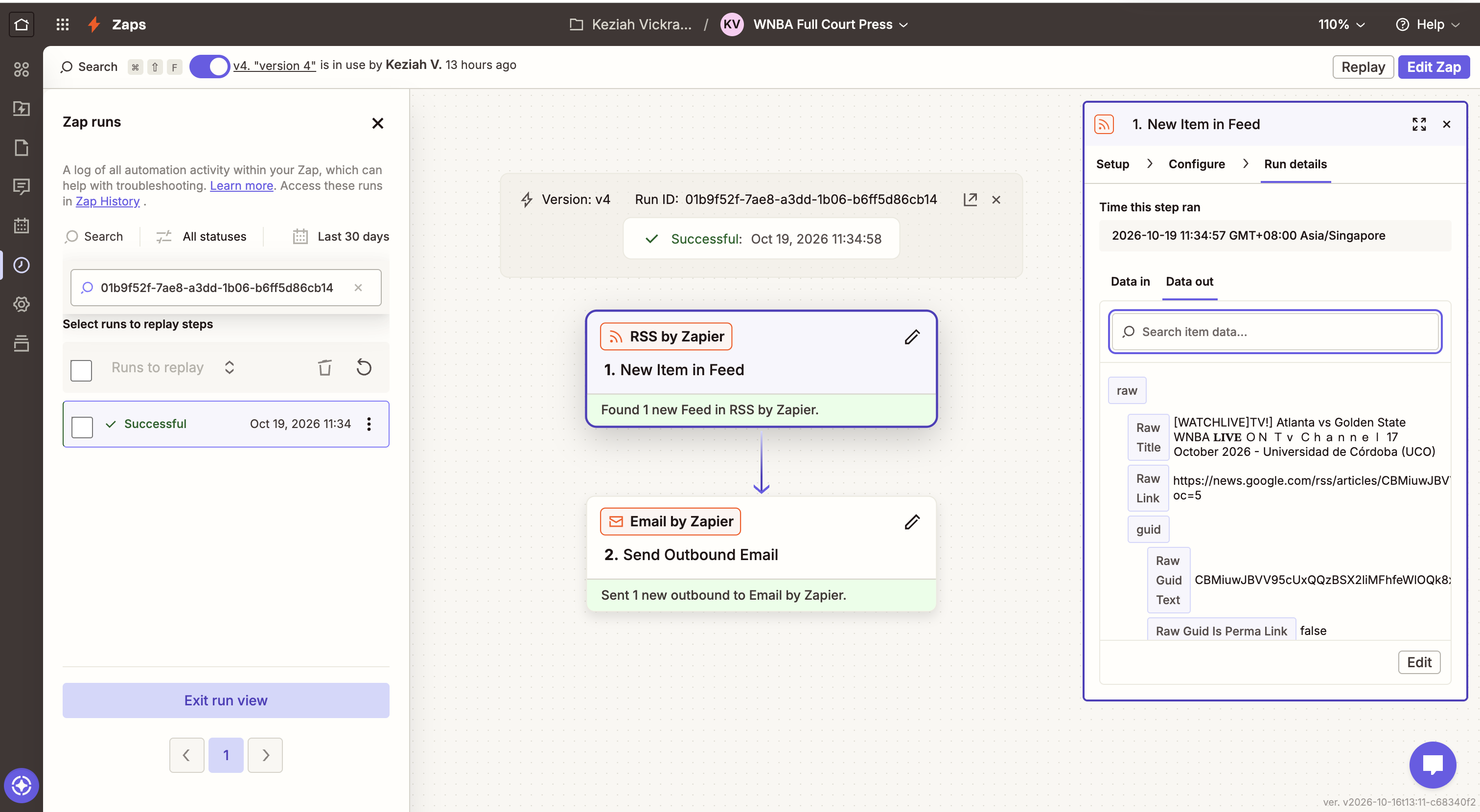
My expectation held. The spam passed every technical check, so only a person reading the alert or auditing Zap history would catch it.
Fix and rerun
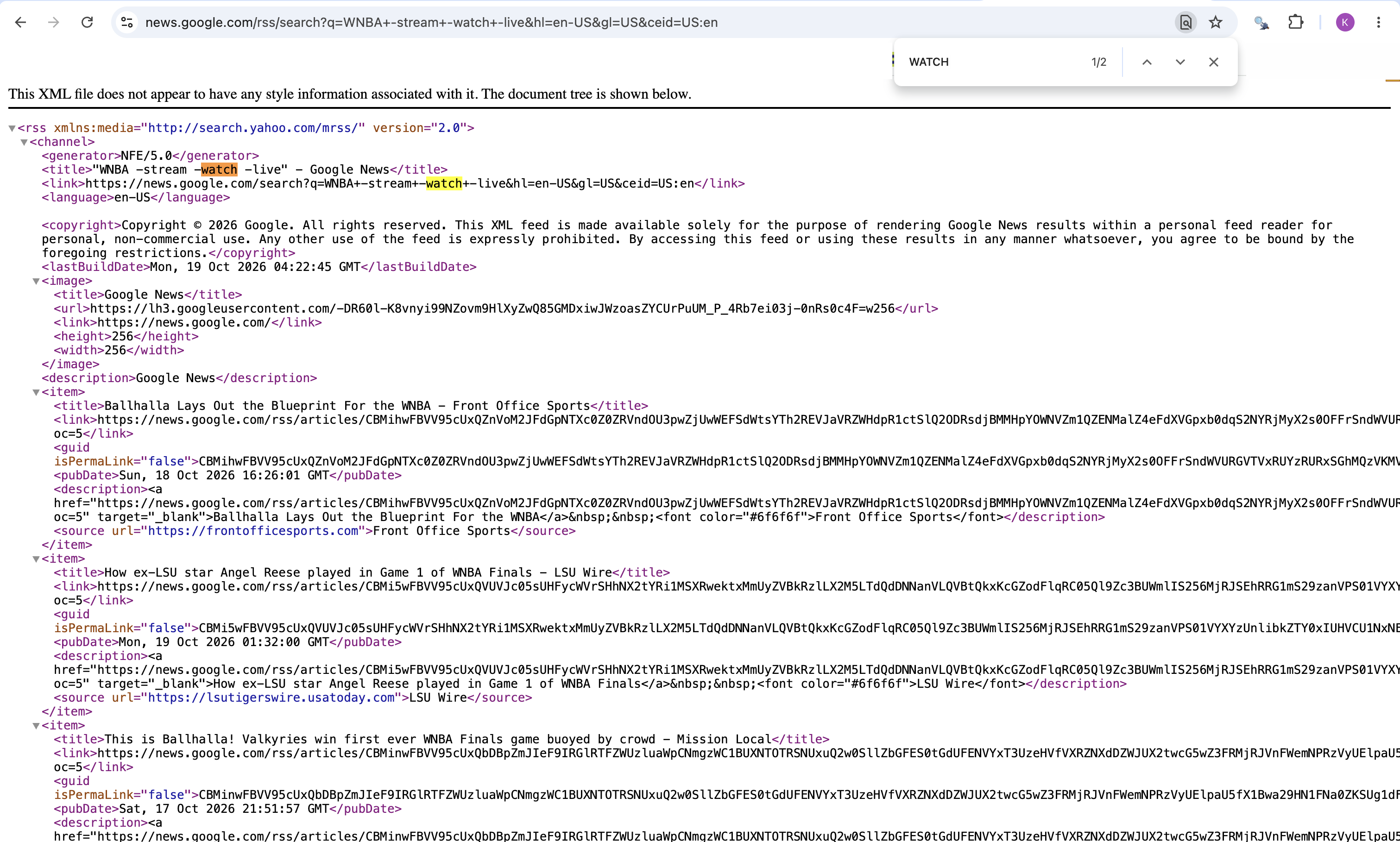
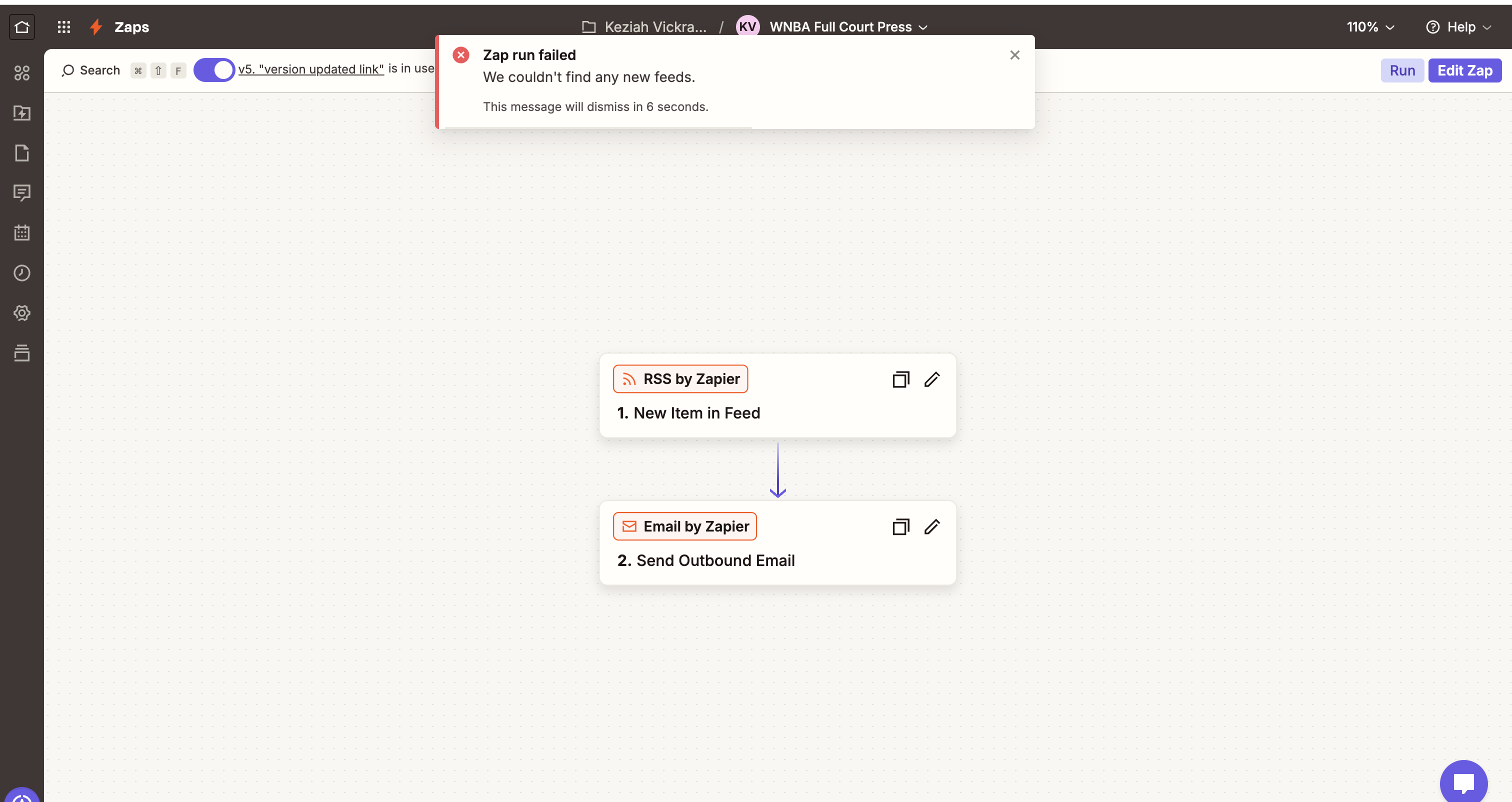
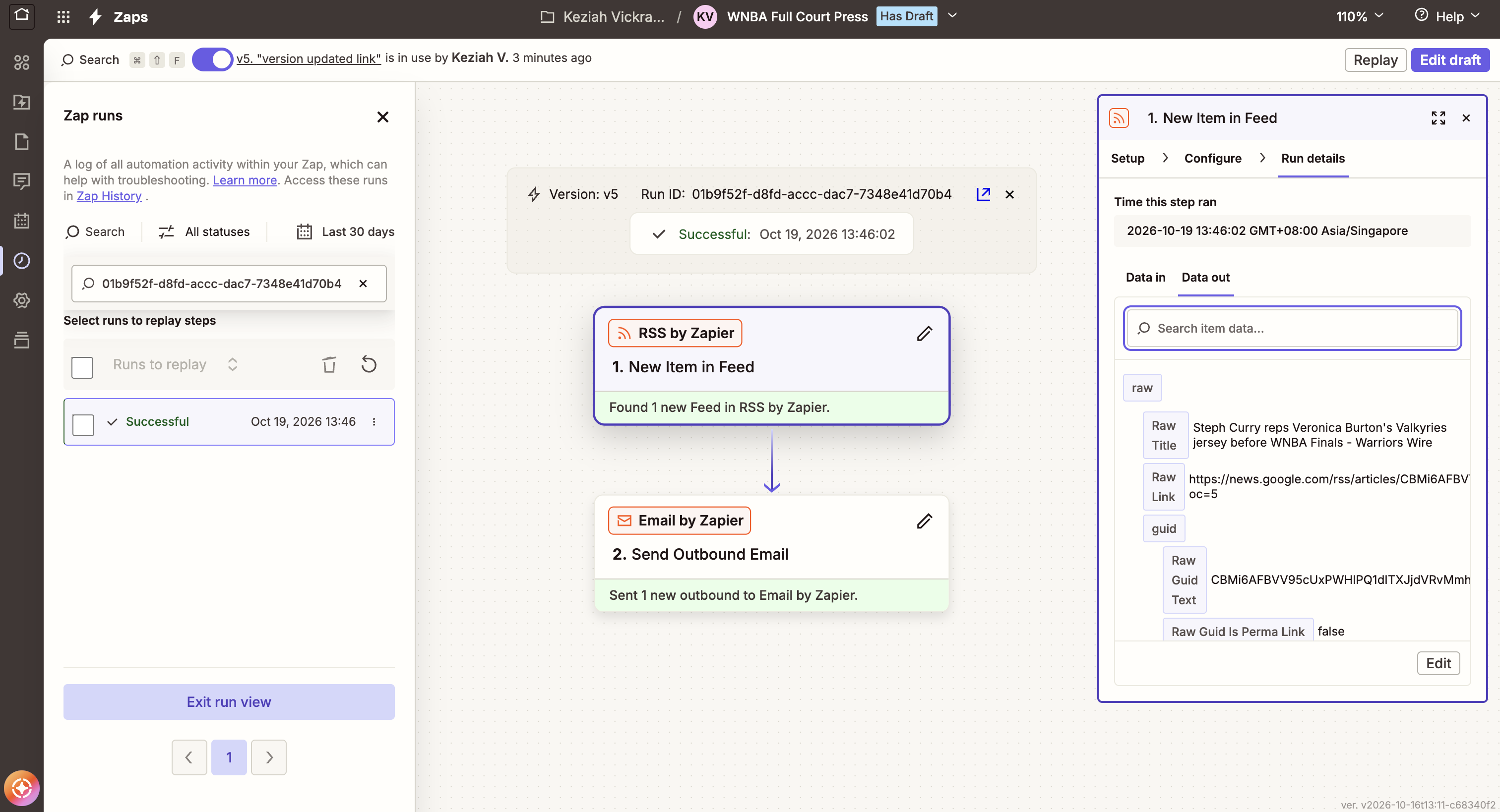
Result (later on Monday)
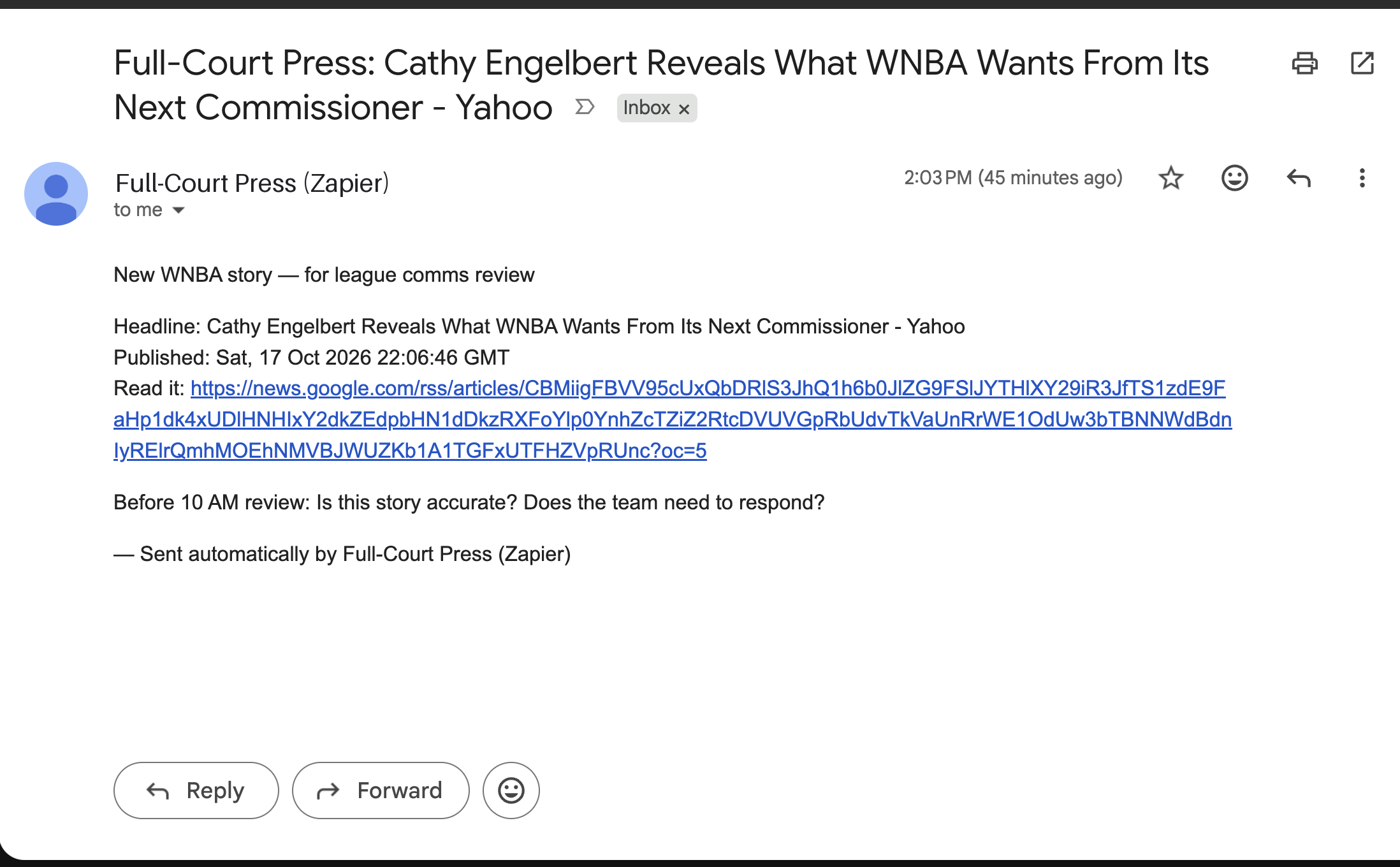
At 2:03 PM the fixed Zap delivered a real news story as an alert, so the exclusion terms filtered out the streaming spam without blocking genuine news.
My Zap history export backs this up. Before the fix that morning, two fake streaming pages still came through as successful runs (‘[WATCHLIVE]TV!]’ at 11:34 AM and ‘WNBA Basketball Reddit Streams’ at 12:04 PM). After the fix, none of the 22 runs between 1:46 and 2:44 PM had ‘watch’, ‘live stream’ or ‘stream’ in the headline.
Zap history → CSV
Turn a Zap history export (.json) into a spreadsheet. The file is read in your browser only: it is never uploaded or saved. The CSV leaves out email addresses, email bodies and Zapier links.